
Alfred Hitchcock Collectors’ Guide: The Man Who Knew Too Much (1934)
- The Master of Suspense’s first international success
- His own big budget US remake followed two decades later
- Contrary to popular belief, he actually preferred the original
- It helped make an international star of Jewish émigré Peter Lorre
- First of six brilliant thrillers crowning Hitchcock’s 1930s British career
- Beat the many mediocre boots: every official, restored release finally listed
Note: this is one of 100-odd Hitchcock articles coming over the next few months. Any dead links are to those not yet published. Subscribe to the email list to be notified when new ones appear.

US poster
Contents
- Production
- Home video releases
- Soundtrack releases
- L.A. Takedown (1989)
- Heat (1995)
- Related articles
Production
Since the runaway success of Blackmail, both Hitch’s and Britain’s first talkie five years earlier, the Master of Suspense’s films had languished largely in the commercial doldrums. But his career came roaring back to life with this, the first of his films to really make its mark across the Atlantic. It was the first of Hitch’s golden run of six superlative 1930s thrillers and is also notable for an exquisitely nuanced performance by Hungarian-born Jewish émigré Peter Lorre, who had recently fled Germany following Hitler’s rise to power. Lorre was by now well on his way to being typecast as sinister villains, a course he had continued on intermittently since his first leading role as a child killer in Fritz Lang’s M (1931). Lang, along with this and his many other expressionist masterpieces, was of course a huge influence on Hitch and it directly led to Lorre getting the gig as head baddie and child kidnapper in this film. At this point, though fluently trilingual (Hungarian, German, French), Lorre spoke very little English so had to learn his lines phonetically. But luckily, his halting, deliberate delivery works strongly in his character’s favour. Though it’s often cited as being his first English-language role, that honour actually goes to M which, being a German multiple-language version (MLV) film, was also shot separately in English and French. Lorre later reprised the badness in Hitch’s next-but-one film Secret Agent, and more than two decades after that featured in two key episodes of Alfred Hitchcock Presents. Hitch was certainly loyal to his favourite actors.
The Man Who Knew Too Much – David Bordwell and Kristin Thompson, Film Art

Leslie Banks and Nova Pilbeam, happy before the gathering storm
The Man Who Knew Too Much is one of the few British Hitchcocks based on an original story rather than an existing play or novel. Hitch had bought the film rights to some tales in the eponymous 1922 short story collection by G. K. Chesterton (Gutenberg, Internet Archive), but in the end only used its title. Hitch’s frequent collaborator Charles Bennett was chiefly responsible for the screenplay, which was novelised in 1935 by Ruth Alexander (also here), following her earlier effort for Blackmail.
Aside from Hitch’s own 1956 American do-over, I can’t find any adaptations of Bennett’s story in other media, but there may be a premake of sorts. According to the Radio Times, two 1931 episodes of The Children’s Hour included “…a story, ‘The Man Who Knew too Much,’ by Reginald Hargreaves.” But details are too scant to ascertain whether he adapted one of Chesterton’s tales for radio or even, like Bennett himself, appropriated the title for his own original work. Speaking of literary efforts, the technical and artistic merits of both films’ scores are thoroughly dissected in Hitchcock’s Music, a groundbreaking treatise with particular, unique emphasis on much of the director’s early career and an essential read.
The longest, most detailed and highly recommended monograph available on this film is:
- Mother and Monster: The Rhetorical Structure of AH’s TMWKTM – Thomas Benson, Monsters In and Among Us (2007) ed. Caroline Joan Picart and Cecil E. Greek.
Arthur Benjamin was the original film’s appointed composer, while journalist and author D. B. Wyndham Lewis supplied the lyrics for Benjamin’s specially written Storm Clouds Cantata. This was featured in the famed climactic scene at the Royal Albert Hall and though Bernard Herrmann was enlisted to compose a new score for the eponymous US remake, he opted to reuse the cantata. Benjamin was even brought in to write an additional 80 seconds to extend his piece and Herrmann was so pleased with the results he arranged for Benjamin to receive an extra £100 over his agreed salary.
Both recordings were performed by the London Symphony Orchestra, who were conducted by H. Wynn Reeves in the original and Bernard Herrmann in the remake. Incidentally, said scene was inspired by “The One-Note Man”, a famed 1921 Punch cartoon by H. M. Bateman. Wyndham Lewis is also credited as the film’s co-scriptwriter, though this is disputed by Bennett who claims his minor contributions were never used. However, Wyndham Lewis has a number of similar script credits for British films of the 1930s, which does undermine Bennett’s claim somewhat.
This Distracted Globe: The Man Who Knew Too Much

Back in my arms again: safe at last, but for how long?
Though it’s one of Hitch’s best-known British films, The Man Who Knew Too Much is generally overshadowed by his own 1956 remake. That version has the benefit of an inflated Hollywood budget and A-list stars James Stewart and Doris Day. It’s further boosted with Bernard Herrmann’s music and Technicolor photography in widescreen VistaVision, courtesy of frequent Hitch collaborator Robert Burks. But it’s much longer at 120 minutes and tends to meander in places, lacking the original’s tight running time, stark B&W visuals and claustrophobic sense of urgency.
Much is made of Hitch himself famously, albeit reluctantly, conceding to François Truffaut in 1962: “Let’s say the first version is the work of a talented amateur and the second was made by a professional.” But this was merely Hitch, who often professed to hating any form of confrontation, begrudgingly acquiescing to Truffaut’s somewhat misplaced, badgering insistence on the superiority of the American version. As if that wasn’t enough, Hitch’s twice-translated and edited words were then lifted entirely out of context. Indeed, throughout that now iconic series of interviews, Truffaut repeatedly states his preference for Hitch’s American films over the British, though he was far less familiar with the latter and in many cases not at all. For proof, just listen to the tapes themselves. For the record, while it’s understandably tempting to draw comparisons between the two versions, I prefer to think of them as separate entities and love both.
Strange that so much hot air should be expended on the relative merits of Hitch’s original and remake, when it wasn’t actually the first film he made twice, nor even his first to have many different versions. Many top directors have had the chance to remake their own hits, especially during the silent era when it was much more commonplace and, of course, in the case of MLVs. The most auspicious examples that spring to mind are über producer-director Cecil B. DeMille’s huge and huger-budgeted versions of The Ten Commandments (1923, 1956). Of course, these came after his three times go-around with The Squaw Man (1914, 1918, 1931). However, there’s also a far more recent, similar but distinctly more one-sided, cinematic pairing…
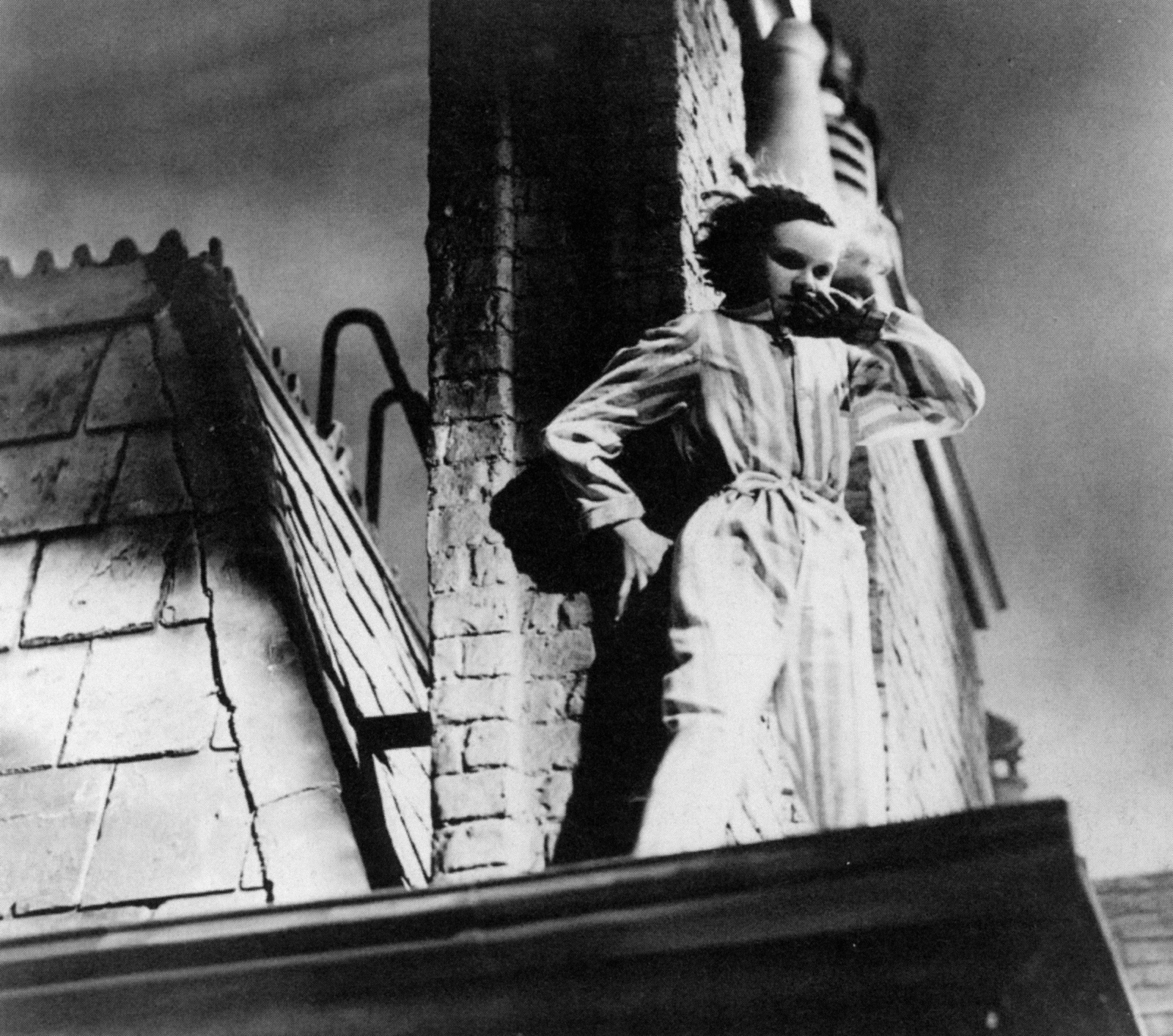
Nova teeters on the brink of disaster
The Men Who Knew Too Much – Ken Mogg, 2021
Home video releases
Original transfer

Australian Madman Director’s Suite DVD
Early DVDs feature a transfer of a decent condition print, albeit with signs of minor damage and wear throughout. These are all its official outings:
- UK: Carlton DVD (2000), also in 2-DVD An AH Double Bill
- Network DVD (2008), also in 10-DVD/11-film H: The British Years
- ITV DVD (2008) – The Times newspaper giveaway
- Italy: Eagle 2on1 DVD (2005) w/The Farmer’s Wife, also in 8-DVD/15-film AH Portrait
- Dall’Angelo Pictures DVD (2009)
- Germany: Concorde 6-DVD/7-film AH: The Early Years (2003, reissued 2011)
- France: Journaux.fr DVD/magazine (2002, 2005)
- Opening 2on1 DVD (2003, reissued 2005) w/The Lodger – original | reissue
- Universal 2on1 DVD (2006, reissued 2013) w/Juno and the Paycock, also in these box sets
- Spain: Filmax DVD (2002)
- Divisa DVD (2003, reissued 2012), also in 4-DVD AH box set
- Benelux: Video/Film Express DVD (2004, reissued 2010, alt), also in 5-DVD/6-film H Collection: The Classics, Volume 1 and 10-DVD/11-film Classic H Collection (Azn)
- Universal 5-DVD/4-film AH Collection (2007), also in AH box set
- Poland: Studio Printel Digibook DVD (2009), also in 7-DVD H: Wczesne filmy mistrza and 6-DVD set
- Hungary: Cinetel DVD (2005, alt slv), also in 5-DVD H box set
- Scandinavia: Futurefilm 8-DVD/9-film H Classic Collection (2006) info
- Australia: Madman DVD (2011)
The UK Network DVD has a decent selection of extras with an introduction by film historian Charles Barr (4min), “Aquarius: Alfred The Great” (1972) UK TV programme (36min) and a brief slideshow (1min). Second place goes to the French Opening Universal as it has a whole second film, The Lodger, and the ubiquitous “Hitchcock: The Early Years” featurette (1999, 24min). The French Universal is also a twofer but, but though Juno and the Paycock is one of Hitch’s rarest on home video, unfortunately the transfer’s not much cop and should avoided. Apart from that, the rest are basically vanilla.
This title has a predictable avalanche of crappy bootleg DVDs and as if their poor A/V quality wasn’t bad enough, many are also from edited American reissue prints that lose up to 14 minutes from the film’s already lean 75-minute running time (72min PAL). Avoid.
2012 restoration
“This new digital transfer was created at the BFI National Archive in London in 2K resolution on an ARRISCAN film scanner equipped with a sprocketless transport from a 35mm nitrate fine-grain master positive held in the archive’s vaults. The restoration was performed by the Prasad Group, India, and the Criterion Collection. The original monaural soundtrack was remastered at 24-bit from an original 35mm optical track owned by film preservationist Bob Harris, which was given to him by producer David O. Selznick. Clicks, thumps, hiss, and hum were manually removed using Pro Tools HD. Crackle was attenuated using AudioCube’s integrated workstation.” – Restoration notes
The latest makeover looks and sounds near perfect but is only available on a few releases so far:
- US: Criterion BD and DVD (2013), also in 4-BD/5-film Classic H
- Criterion Prime Video HD
- UK: Network BD (2015)
- France: Elephant Films BD, DVD and BD/DVD set (2014), also in 5-BD/5-DVD AH: Aux origines du suspens
- Brazil: Versátil 3-DVD/6-film O Cinema de H/alt (2015) info
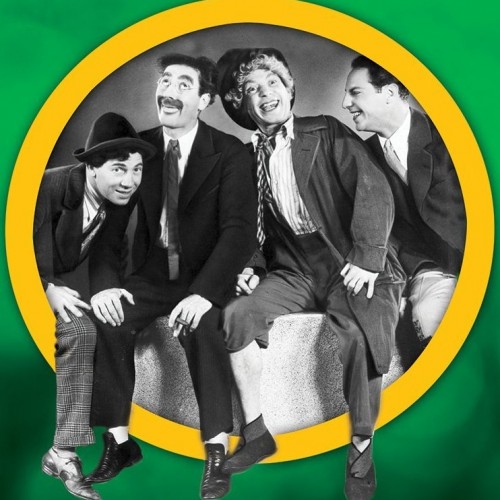
The Man Who Knew Too Much wasn’t officially released on DVD in the US until 2013 but it was well worth the wait, as Criterion’s disc and its corresponding BD ace all others with their newly restored transfer, many extras and 20-page essay booklet. They’re easily the definitive editions for either format. Nice sleeve too, though the long-deleted Oz DVD’s modern Expressionist artwork above also fits the film to a tee. Meanwhile, Network’s region B BD is perfectly fine if you don’t have multi-region playback and it has the same extras as their earlier DVD. The French discs’ only extras are a short video intro and 15 modern trailers for similar Elephant Films releases. Note their optional French subtitles were mistakenly unsynchronised; they lag by 36 seconds on early BD copies but a corrected disc was later issued.
These are the only official BDs to date: all others are boots. I’m particularly referring to Euro pirate BD-Rs from Germany (Great Movies/WME), Spain (Layons/JRB) and Italy (Studio 4K).
Odd fact: despite original trailers surviving for at least five of Hitch’s British films, only The Lady Vanishes has had hers properly released on home video. Mind you, the 1½-minute trailer for The Man Who Knew Too Much is bizarrely included 48 minutes into an otherwise unrelated Hitch documentary included on some Murder! DVDs. A bit of cheeky padding, methinks.
Soundtrack releases
There are many official re-recordings of part and full scores from Hitch’s American films, but sadly not so for his British works. So far, there are only re-recorded excerpts from this film, The 39 Steps and The Lady Vanishes. Two of them, 1995 renditions of a four-part suite from Steps (4:06) and a prelude from Lady (3:03), have appeared on various collections but the most comprehensive are:
- Silva Screen 2-CD/MP3 Psycho: The Essential AH (1999) City of Prague Philharmonic Orchestra cond. Paul Bateman
- Silva Screen CD/MP3 The 39 Steps: Music from and Inspired by the West End Show (2008)
Both also contain a prelude from Man (2:14) but it’s from the 1956 version and is written by Bernard Herrmann.
An excellent 2011 recording of the Albert Hall sequence’s Storm Clouds Cantata from the 1934 version was released on disc the following year. There are two more takes on the cantata, recorded in 1993 and 2012, but they were based more closely on Herrmann’s extended version for the 1956 remake.
- Chandos CD/MP3 Film Music of Arthur Benjamin & Leighton Lucas (2012, booklet) BBC National Orchestra of Wales cond. Rumon Gamba (7.44)
Various other Hitchcock film music compilations feature selections from his three best known British talkies and others, but they’re almost all bootlegs too, mostly lifted directly from the film soundtracks themselves. The sole fully-licensed exceptions also include cues from Blackmail, Steps, Sabotage, and Young and Innocent.
Hitch may have second-guessed himself by, ahem, executing The Man Who Knew Too Much twice, but make no mistake: the original’s the best overall and he actually preferred its slightly more ragged charms. Hitch really hit his stride with this, the first of a run of British thrillers (that are as good as anything he ever did, including his lauded later American movies. No self-respecting fan of Hitch, or of cinema in general, should pass up on any of them.
L.A. Takedown (1989)

L.A. Takedown aka Showdown in L.A. This German VHS is worth getting for the groovy sleeve alone.
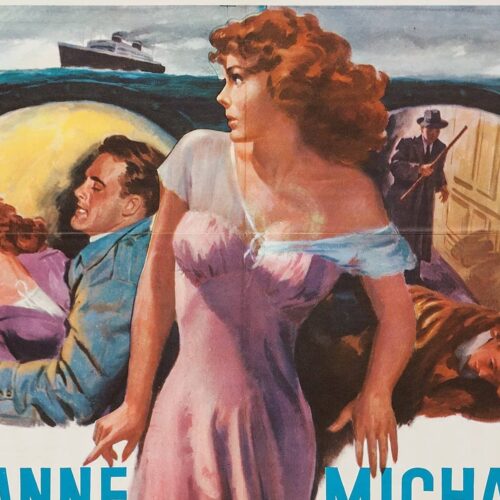
Heat (1995) is the brainchild of acclaimed writer/producer/director Michael Mann, known for many acclaimed film and TV works over a lengthy, successful career. But this is at the front of the pack; it’s a deep, introspective and action packed crime thriller – though I think of it as more of a modern western. Anyway, in 1989 he shot the same script as L.A. Takedown, a modest TV movie and pilot for a never-to-be-realised series. Though a decent film in its own right, it ultimately served as a kind of proof of concept. Hitch fans should definitely check out both of them; particularly when taken in chronological order, they’re somewhat analogous to successive viewings of The Man Who. The original is lesser known partially owing to it having been retitled numerous times in different countries. It has yet to make a home video appearance stateside but there is a long-deleted Canadian VHS. Most of its official releases are via a handful of PAL VHS tapes and DVDs:
- UK: Mia DVD (2000)
- Germany: Concorde DVD (2008)
- France: Universal DVD (2009) – w/two Mann interviews
- Sweden: Atlantic DVD (2002, reissue)
- Denmark: On-Air DVD (2001, alt)
- Finland: Future Film DVD (2003)
Heat (1995)

US poster
Mann’s magnum opus was hotly anticipated for marking the first proper onscreen pairing of movie legends Al Pacino and Robert De Niro. Though they were both in Francis Ford Coppola’s seminal The Godfather: Part II (1974), they never actually appeared in the same scene. No one was disappointed: Heat was a massive critical and commercial hit and is often held up as one of the best films its many participants were ever involved in. As you’d expect, L.A. Takedown’s much bigger budgeted offspring is very widely – and cheaply – available. Initially issued everywhere as a barebones single DVD, it eventually got the 2-disc special edition treatment with a similar but remastered transfer and plethora of special features. The latter was mirrored in its first BDs, all of which are absolutely identical: region 0, same extras, subs, dubs, etc. Note that Mann altered the film very slightly between its initial DVD and special edition releases, removing two short lines of dialogue. Forget the Italian releases from Cecchi Gori: they’re all barebones and of questionable provenance.
- US: BD (steelbook, reissue), 2-DVD, DVD
- Canada: BD (steelbook, reissue), 2-DVD, DVD
- UK: BD (steelbook, reissue), 2-DVD, DVD
- Germany: BD (steelbook, Digibook), 2-DVD (steelcase, reissue), DVD
- France: BD, BD/DVD Digibook, 2-DVD, DVD
- Spain: BD, 2-DVD, DVD
- Australia: BD
By the way, if you are going to check out Heat, I strongly advise you to stick to its original transfers. Over two decades after the fact, Mann went back in again and tinkered with the film more comprehensively, and all releases since 2017, are of his “Director’s Definitive Edition”. In short, he removed some snippets of footage and dialogue, and remixed the already brilliant, award winning soundtrack. But worst of all, he gave the film an awful, revisionist teal wash in a misguided attempt to make it look like a more modern action movie. Lastly, the latest transfer is zoomed-in, so cropped on all sides. Yuk all round. Mann’s made and released multiple cuts of most of his films, often long after the fact, creating a headache for fans and collectors. Like George Lucas and Chaplin before him, he clearly subscribes to the belief that no work of art is ever really finished and they’re all just ongoing projects in a state of perpetual flux.
The re-remastered reissues of Heat don’t have any extra image resolution over the original releases to help mitigate their shortcomings either. But at least they add a couple of extras on top of the previous bountiful selection: a couple of lengthy cast and crew discussion panels, filmed in 2015 and 2016. But you won’t find those on various single-disc DVDs and BDs; these are the bulk of the main releases, all of which are absolutely identical two-disc affairs.
- US: BD, DVD, Prime Video HD
- Canada: BD
- UK: BD (steelbook), DVD, Prime Video HD
- Germany: BD (steelbook), DVD, Prime Video HD
- France: BD, (steelbook)
- Spain: BD
- Australia: BD
Related articles
- Alfred Hitchcock Collectors’ Guide: Setting the Scene
- Alfred Hitchcock Collectors’ Guide: Miscellaneous British Films
- Free the Hitchcock 9! Releasing the BFI-Restored Silents on Home Video
- Bootlegs Galore: The Great Alfred Hitchcock Rip-off
- Alfred Hitchcock: Dial © for Copyright: British Law
- Hitchcock/Truffaut: The Men Who Knew So Much
- Alma Reville: The Power Behind Hitchcock’s Throne
- Alfred Hitchcock Collectors’ Guide: The British Years in Print
- Alfred Hitchcock: The Dark Side or the Wrong Man?
- Alfred Hitchcock Collectors’ Guide: Miscellaneous Releases
- Beware of Pirates! How to Avoid Bootleg Blu-rays and DVDs
- Charlie Chaplin Collectors’ Guide, Part 2: The Bad, the Ugly and the Good
For more detailed specifications of official releases mentioned, check out the ever-useful DVDCompare. This article is regularly updated, so please leave a comment if you have any questions or suggestions.

I started Brenton Film because I love film – quelle surprise! The silent era, 1930s and 1940s especially get my literary juices flowing, so you’ll see a lot about those. For more, see the About page.



)
4 Comments
AG
April 28, 22:38Brent Reid
April 29, 10:50Anton
July 20, 20:14Brent Reid
July 21, 14:43